SUBSCRIBE NOW WELCOME BACK. Do you want to continue reading where you left off? New Republic subscribers can pick up where they left off no matter which device they were previously using. SUBSCRIBE NOW

Go Home Explaining Steve Jobs's Genius

TIMOTHY NOAH NOVEMBER 1, 2011

Explaining Steve Jobs's Genius

[Guest post by Isaac Chotiner

“He is book smart.” “She has people smarts.” “He isn’t intellectually intelligent.” “She has no emotional intelligence." These phrases are all familiar because, as observers of other people, most of us do our best to define brain type as well as brain power. Particular varieties of intelligence are easy to recognize and difficult to precisely explain. In The New York Times, Walter Isaacson, whose Steve Jobs biography has been garnering significant attention, does his best to delineate what he calls, “The Genius of Jobs.” His piece is an excellent example of how hard a task this is. 
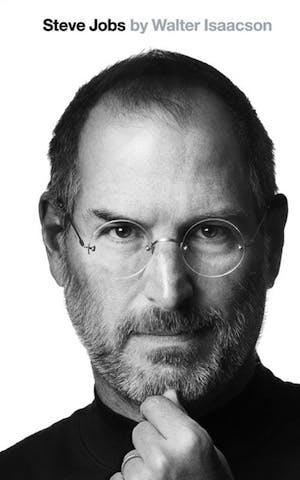
Isaacson begins with a story about Jobs and his family sitting around the kitchen table as Jobs struggles with a brain-teaser. Isaacson makes the point that Bill Gates would have applied some clean logic to the problem, and effortlessly come up with a solution. And yet, as Isaacson notes, “Mr. Gates never made the iPod. Instead, he made the Zune.” (For clueless readers like myself, the Zune is one of Microsoft's digital media product lines). Isaacson goes on to say that Jobs was not conventionally smart, but was instead a genius whose imaginative leaps were "sparked by intuition, not analytical rigor." Moreover: 

“[Jobs] told me he began to appreciate the power of intuition, in contrast to what he called “Western rational thought,” when he wandered around India after dropping out of college. ‘The people in the Indian countryside don’t use their intellect like we do,’ he said. ‘They use their intuition instead ... Intuition is a very powerful thing, more powerful than intellect, in my opinion. That’s had a big impact on my work.’” 

Isaacson lets pass this absurd statement as if it contained real truth and insight. Instead, it reads like the most clichéd and hackneyed evaluations of Indian thinking going back hundreds of years and often appearing in concert with a “deep” interest in “eastern” spirituality (this being true, not surprisingly, in Jobs's case). It is hard to say what’s sillier: the idea that Indian farmers trying to feed their families don’t use “rational thought” to calculate, say, crop yields, or the unstated implication that not doing so would be beneficial. 

No matter: this still raises the elusive question of what separates intuition from “rational thought” or “analytical rigor.” Isaacson writes:

“Mr. Jobs’s intuition was based not on conventional learning but on experiential wisdom. He also had a lot of imagination and knew how to apply it. As Einstein said, “’Imagination is more important than knowledge.’” 

If imagination is more important than knowledge, what is experiential wisdom? Does it not confer knowledge? And if so, what is Isaacson trying to say? He goes on to claim that one of Jobs’s predecessors was Benjamin Franklin, who also had Jobs’s unique intuitive genius.

"Among the founders, Franklin was not the most profound thinker — that distinction goes to Jefferson or Madison or Hamilton. But he was ingenious. This depended, in part, on his ability to intuit the relationships between different things. When he invented the battery, he experimented with it to produce sparks that he and his friends used to kill a turkey for their end of season feast. In his journal, he recorded all the similarities between such sparks and lightning during a thunderstorm, then declared “Let the experiment be made.” So he flew a kite in the rain, drew electricity from the heavens, and ended up inventing the lightning rod. Like Mr. Jobs, Franklin enjoyed the concept of applied creativity — taking clever ideas and smart designs and applying them to useful devices."

The last clause of the last sentence might well apply to Jobs, but in what way is this Franklin story mostly about intuition? It sounds analytically rigorous to me, even if it was an intuition that “sparked” the original discovery. 

The concluding section of the piece is the most bizarre. Isaacson ends by saying, “China and India are likely to produce many rigorous analytical thinkers and knowledgeable technologists. But smart and educated people don’t always spawn innovation. America’s advantage, if it continues to have one, will be that it can produce people who are also more creative and imaginative.” What happened to all that Eastern wisdom that Jobs discovered on his journey to holy India? 

“I know it when I see it” was Potter Stewart’s famous claim about how to identify hard-core pornography, and something similar might be said about intuitive genius. Anyone who has even glanced at Apple products “intuitively” understands that the brain behind their design was in a class by itself, even if the head which contained that brain couldn’t solve the occasional brain-teaser. The problem continues to be not how to recognize the Steve Jobs’s of the world, but rather how to explain or understand them. 

P.S. On a slightly separate note, Isaacson writes, rather literally, 

“The ability to merge creativity with technology depends on one’s ability to be emotionally attuned to others. Mr. Jobs could be petulant and unkind in dealing with other people, which caused some to think he lacked basic emotional awareness. In fact, it was the opposite. He could size people up, understand their inner thoughts, cajole them, intimidate them, target their deepest vulnerabilities, and delight them at will. He knew, intuitively, how to create products that pleased, interfaces that were friendly, and marketing messages that were enticing.”

When people talk about a lack of “emotional awareness,” they are often referring to people like Jobs. Yes, it’s true Jobs was “aware” or “attuned.” He also seems to have been selfish and solipsistic and often uninterested in how his “unkindness” affected other people. There is no contradiction or irony here.

SHARE YOUR THOUGHTS

Show all 20 comments

You must be a subscriber to post comments. Subscribe today.

20 comments

This is an excellent post, Isaac. Steven Jobs natterings on Eastern modes of thought is a product of one of the worst contributions of the 1960s. A lot of nonsense gets written about cerebral creativity and you did yeoman's work deconstructing certain strains that one often encounters.

- liberalref

November 1, 2011 at 1:19pm

You must be a subscriber to post comments. Subscribe today.

People on the street, in an airplane, at the ball field, sitting in a restaurant, even driving a car, fiddling with these little Apple gadgets. Most fans of these gadgets say they keep them in contact. I say they isolate them. And that's Jobs genious. He understood that most people want less contact with the world, not more. Which also helps explain lack of awareness. I once knew a woman who saw everything around her, or at least it seemed as though she did. Time with her made me appreciate my surroundings more, and to tune in to what others look like, what they say, and how they move about. I think it was inate, but she was in sales so it complemented her career. I haven't seen her in years, but I bet she has none of these gadgets. She's probably sitting on a park bench observing people fiddling with their Apple gadgets. They won't notice her.

- rayward

November 1, 2011 at 2:01pm

You must be a subscriber to post comments. Subscribe today.

I think creative people see potential in things others eithers can not see or don't bother. I saw this in an interviewe on T.V. of Sonny Rollilns, one of the great Jazz Tenor Saxophone players. He explained how he came up with a particular song. He was sent into a hotel to get rooms for the band and a short strand of a song was playing in the lobby. Immediatly he saw its permutations and opportunities for improvisation. Jobs, in my estimation, saw the utility of small static drives that could store music and otherwise serve for a handheld computer and phone.

- Nusholtz

November 1, 2011 at 2:14pm

You must be a subscriber to post comments. Subscribe today.

Most seem to forget that Jobs, while inspiring, didn't design a thing. He wasn't an engineer; he didn't write code, didn't create hardware. That gets lost in the hero worship. He did come up with some brilliant ideas and in particular made sure the bean counters stayed out of the way while his crack tech staff implemented his vision. BUT, he didn't create the 'genius' in the end. That fell on people like Wozniak and other engineers to make things really work. And don't forget a lot of the 'genius' behind Apple is hype and great marketing. Jobs was smart enough to figure out merging the store and the product (iphone/pod/pad with iTunes store and software) was the key to getting a captive market and making customers happy. That's something Amazon looks poised to out-Apple Apple with their latest Kindle Fire. The rest is 'reality distortion field' as it's been called.

- tmmats

November 1, 2011 at 2:16pm

You must be a subscriber to post comments. Subscribe today.

What tmmats said, although I'd credit him with being the driving force behind the simplicity in many of Apple's products, e.g. the famous single button on the iPhone. As an engineer myself, I have to respect that single mindedness, as I probably would have stuck a few more on myself, as do many of Apple's competitors. And none of them are as intuitive to use as the iPhone. It is a great example of user friendly technology in that I don't need to read the manual (much like I don't need to read the manual of my car) despite in general not representing too much in the way of new or innovative technology (other than it's UI). However I find it difficult to not observe that when faced with a choice between a moderately risky procedure with well established success rates against a "traditional" treatment with a success rates on par with doing nothing, he went with woo-woo on a very serious matter. Obviously personal medical decisions are extremely difficult and there are plenty of factors at play, but this was not a sound or rational decision. This is not to begrudge or belittle any of his achievements, but intuition would appear to be considerably less exciting if it leaves you prematurely dead.

- Nari224

November 1, 2011 at 2:44pm

You must be a subscriber to post comments. Subscribe today.

Nari, I agree with your comments in general but I'm more impressed with Apple/Jobs in their marketing and not quite so much with their products. Apple products intuitive to use but I also get irritated with the "our way or the highway" attitude too. I've lived with an iphone for a few months (company phone) and while I'm impressed with the simplicity using it, I am not impressed overall having used Android phones too. It stinks at it's primary function, a telephone (to me that's a fail). It's obvious to industry insiders Apple is already beginning to slip (check out Rick Merritt's column in EE Times on Apple and the iPhone 4S). Apple products remind me of Jobs himself: elegant, intuitive, arrogant and not 'all that' when you really dig deep and block the distortion field. And let's not forget that Apple commands a price premium so it's not as hard to engineer a product if price isn't much of a concern. I'm saddened the man died so young but enough with the hero worship.

- tmmats

November 1, 2011 at 3:42pm

You must be a subscriber to post comments. Subscribe today.

I don't see intuition and analytical rigor being in conflict at all. Both are needed if you want to do new things successfully. It does not fit into the stereotype of science, but at its core the successful practice of science depends on creativity and intuition -- to see patterns in data, to think of new ideas or solutions that have not been done before. But if that is all you have, you don't get anywhere, so this needs to be backed up with analytical rigor to turn ideas into something worthwhile for others to think about and test. I see the same factors at play in engineering (at least for those engineers who are pushing the boundaries to do new things), and product design.

- JEFF FREY

November 1, 2011 at 4:00pm

You must be a subscriber to post comments. Subscribe today.

To understand the significance of the statement “Mr. Gates never made the iPod. Instead, he made the Zune.” one needs to understand more than that "the Zune is one of Microsoft's digital media product lines." While the iPod was the ultimate in cool because of its elegant package and user interface and became a symbol of one's individualism while attaining "must have" status; the Zune was too clever by half, too opportunistically co-opting social networking mechanisms to make each owner a vector marketing music to their friends. It was transparently corporate, and uncool, in the very distinct comparison against the Apple products and services.

- aduncanson

November 1, 2011 at 4:58pm

You must be a subscriber to post comments. Subscribe today.

tmmats - no argument that the iPhone is a complete failure as a, well, phone, and has been since the original version. But clearly people accept this due to its other features. The only conclusion one can draw from the persistance of the problem is that Apple is actually a really small company. I don't think the "phone" issues are much of a secret, but either its not a priority for them (unlikely in a flagship product), or they just don't have the resources to address it over competing issues/needs. So perhaps if Mr Jobs had hired some more engineers they'd be able to get it fixed. It's not like good audio quality in a cell phone is an unobtainable holy grail or anything. That being said, my iPhones have just worked. I also grate against the closed architecture, but it definitely makes it more reliable. I can't say that about the Android phones I've used, all of which present the usual downward spiral in speed and reliablity normally assocated with a Windows install as it ages. True story - I was told in Redmond by MS employees that they all just have their machines re-imaged every 6 (!) months to solve that problem. But I agree with the hero worship. It just highlights the dearth of people who both excel at business and the PR side today. Who knows who runs GE or GM today for example, the former of which at least is probably far more important to my general lifestyle and well being than any happiness I derive from my Apple products.

- Nari224

November 1, 2011 at 5:19pm

You must be a subscriber to post comments. Subscribe today.

Read some of Tolstoy's long disquisitions on the idea of "genius" in War and Peace substituting "Steve Jobs" for "Napoleon" and you might get a clearer idea as to the value or lack thereof of such discussions.

- AaronW

November 1, 2011 at 6:53pm

You must be a subscriber to post comments. Subscribe today.

A little bit of sour grapes here by Mr. Noah and some of the posters here. Steve Jobs did some really cool things. The iPhone was just his last version of the Newton that never made it into production 20 years ago. As an HP Calculator Nerd with a programmed 48GX, I wanted my calculator to have my calendar and contacts in it because I had it with me everywhere. So did Steve Jobs. Little did I know the calculator would be a phone. But the iPod was really the remarkable product. The ability to carry around your whole muic collecton with you was staggering. People can nit-pick the elegant button, but that button could slice your music collection by artist, song or album for about 2,000 albums. My Dad's collection of 78 rpm Jazz records was an innocent bystander in a flooded basement. About 50 records that won't be heard again. When they were played, one at a time, you couldn't jump around or they would skip. Now he can replace the unreplaceable on-line, and listen to them in the car with a Bluetooth Radio and the iPos doesn't leave your pocket. Maybe Steve Jobs wasn't a genius, but if not, he was really lucky.

- CRS9TNR

November 1, 2011 at 6:58pm

You must be a subscriber to post comments. Subscribe today.

I was going to say, CR. And some of them write as if they are the geniuses, and not the late Mr. Jobs. Where are their inventions that surpass those of Mr. Jobs?

- liberalref

November 1, 2011 at 7:52pm

You must be a subscriber to post comments. Subscribe today.

liberalref strikes again with his bogus contention that no one who hasn't achieved fame and fortune on the level of Steve Jobs or President Obama has a right to criticize anyone who has. --And some of them write as if they are the evil geniuses, and not the late Mr Hitler. Where are their conquests and murdered millions that surpass those of der Fuhrer?--

- AaronW

November 1, 2011 at 8:51pm

You must be a subscriber to post comments. Subscribe today.

I get "Maximum PC" magazine and they tend to be Apple-haters, too. The great majority of users don't give a flying flip if it is a "closed system" or not (although I understand why engineers want to fiddle), they just want it to work and be easy to use. And Apple stuff fits that bill -- I have almost never had to read the manual to get an Apple device working. The original iPad click wheel was absolutely brilliant.

- JEFF FREY

November 1, 2011 at 9:28pm

You must be a subscriber to post comments. Subscribe today.

No one protests when groupthink strikes out here. No charge against the opposition is too over-the-top to be invoked without a peep from the groupthinkers. But let me say something that is only slightly hyperbolic for effect, and watch the herd gather and start stamping around. It's hilarious. I mean, really, you people bitching about Steve Jobs' products is hilarious If we had to depend on you for gadgets we would still be living in caves.

- liberalref

November 1, 2011 at 10:48pm

You must be a subscriber to post comments. Subscribe today.

libref: "slightly hyperbolic for effect...If we had to depend on you for gadgets we would still be living in caves" You apparently have a different understanding to "slightly" than me. I'm pretty sure we weren't living in caves before Jobs and Wozniak were twinkles in their parents' eyes. But you might have a perspective that isn't available to the rest of us. However I am at a loss to identify the "sour grapes" or self description of genius that you and CRS9TNR refer to in the posts above. tmmats correctly pointed out that Jobs is not responsible for many of the accolades given to him. He was an ideas man, and an exceptional one at that, an example of which I referred to with the single button on the iPhone. But he wasn't an an engineer, and many (most?) of "his" ideas were stolen from others. That he did a better job of putting them all together is a credit to him that cannot be diminished. But to pretend that luck has nothing to do with his success (like being born in the right place at the right time) is absurd, which is precisely my (and presumably tmmats') problem with the hero worship. Did he create wonderful products? Absolutely. Did he do it all himself, and would none of it have happened without him? Absolutely not, and much less clear, respectively. Apparently once someone is deified by the media and our good friend libref, it's all groupthink if you feel that perhaps we should take a more realistic view of a person's achievements. And this is especially true if you feel that perhaps the doers should get some of the glory, in perhaps the vain hope that today's smart kids will be encouraged to be the next doers, without who the ideas people would actually be living in caves.

- Nari224

November 2, 2011 at 11:11am

You must be a subscriber to post comments. Subscribe today.

Simplicity. User friendly. It applies to all Apple products. I have used them from day one. Interestingly, before there were the Hewlett Packard calculators. Steve jobs took curates and worked for a while with HP during his young years. Then he started his computer odyssey on his own. And succeed it went. Genius comes in all shapes and forms. There is Mozart in music. And as Apple products are, Mozart music is simple, user friendly, perfect. My late wife loved music by Bach, who is more mathematical mature in form. Two different types of geniuses. Also Bach music is more appropriate to the religious side of humans. While Mozart music is more for the playful side of the human. I will always remember and miss Steve Jobs. Now I use his i-Pad 2, day in day out. I used for over five years his i-Book G4. As we Buddhist believe he will reincarnate. I kid you not.

- JAIMECHUCH

November 2, 2011 at 11:34am

You must be a subscriber to post comments. Subscribe today.

JEFF - a closed system gives you trade offs. As I noted above, my iPhone just works, a quality not universally shared by the competitive open systems. But as consumers and users a closed system stifles innovation. If Apple doesn't do it, or doesn't let someone else do it, it doesn't get done. Or it doesn't get done as well by Apple if someone else does it. And you pay a lot more for it, see for example the "tax" Apple puts on your purchase of something as simple as a TV out by requiring that the adapter have a completely unnecessary chip in it for the device to recognise. Which Apple just neglects to license out. But a natural experiment on open v closed has already been performed, and closed lost. At the risk of engaging in libref's hyperbole, if we still had Commodores and Apples (and PETs etc) instead of the open "IBM" architecture, we'd still be in the computing stone age compared to where we are today. On the other hand, a lot more jobs would still exist that don't today, so there you go.

- Nari224

November 2, 2011 at 1:34pm

You must be a subscriber to post comments. Subscribe today.

By the way, Indians have natural rhythm too.

- boyski

November 2, 2011 at 1:50pm

You must be a subscriber to post comments. Subscribe today.

So do I, boyski. My natural rhythm usually involves a trip to the can about ten minutes after my first cup of coffee.

- AaronW

November 2, 2011 at 4:26pm

You must be a subscriber to post comments. Subscribe today.

SHARE HIGHLIGHT

0 CHARACTERS SELECTED

TWEET THIS

POST TO TUMBLR

SHARE ON FACEBOOK

Close