John Adams

According to Commentary's Jennifer Rubin: Obama, as presidents have traditionally done, released a Passover message. It is typical Obama — off-key, hyper-political, and condescending. The core of the message is this: READ MORE >>

Bill Burton at today's WH press briefing, Oak Bluffs School Filing Center edition: And here's what's on the reading list, because I know that some folks have been asking -- it's long:  "The Way Home," by George Pelecanos; Tom Friedman's "Hot, Flat and Crowded"; Richard Price's "Lush Life"; Kent Haruf's "Plainsong"; and "John Adams" by David McCullough. READ MORE >>

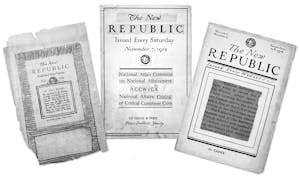
Throughout its 95-year history, The New Republic has featured the work of countless renowned historians on America's founding fathers. For the Fourth of July, we dug up our best book reviews, historical essays, and mini-biographies on the founders. Here are some of the highlights: Charles A. Beard, November 14, 1914: "Jefferson and the New Freedom" Beard writes about the influence of Jefferson's political philosophy on the Wilson administration's "New Freedom" agenda. READ MORE >>

Last night, Gwen Ifill asked Governor Sarah Palin and Senator Joe Biden what their understanding of the role of the vice presidency was. The answers were not encouraging.Specifically, Ifill asked whether they agreed with Vice President Dick Cheney’s assertion that the vice presidency is a part of the legislative branch, as well as the executive branch. READ MORE >>

Did this week's episode of HBO's John Adams leave you hankering for more French harlots and playboy diplomats? Then be sure to check out our debate between Steve Waldman and Jack Diggins on Sunday's episode of the miniseries. READ MORE >>

Mitt Speaks!

Romney just quoted John Adams saying, "Freedom requires religion." This is a pretty radical statement, and something the candidate should be asked about later. Correction: Apparently that was not a John Adams quote; Romney said it on his own.   --Isaac Chotiner  READ MORE >>

Against the veto.

This summer, President Bush issued a veto for the first time. The occasion: a bill--passed by wide but not veto-proof majorities in the House and Senate-- that would have expanded federal funding of stem-cell research. Following Bush's announcement, liberals, predictably, denounced his move as a capitulation to the religious right, while conservatives, just as predictably, lauded his commitment to the sanctity of life. What almost no one stopped to consider was whether Bush should have had the ability to veto the bill at all. READ MORE >>

John Marshall was not the first chief justice. The Supreme Court was formed in 1789, shortly after the Constitution was ratified, and Marshall was appointed in 1801. But the Court had little business in its early days, and the period of Marshall's chief justiceship, which extended until his death in 1835, was the formative era in the history of the Supreme Court and in the interpretation of the Constitution. READ MORE >>

Pages

SHARE HIGHLIGHT

0 CHARACTERS SELECTED

TWEET THIS

POST TO TUMBLR