Trump Threatens to Turn Iran War Into an Even Bigger Conflict
Donald Trump threatened strikes on Houthis in the Red Sea.

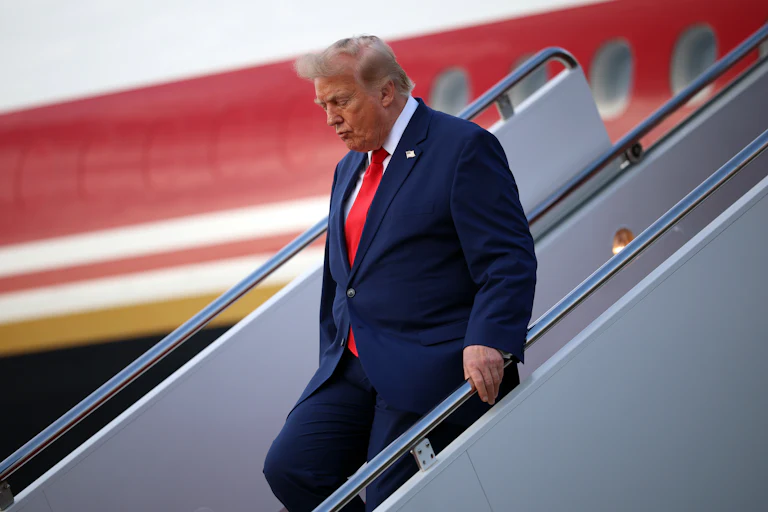
The U.S. president issued another threat against Iran Thursday, pledging to hold the country “responsible” for attacks carried out by Houthis the night before against Saudi Arabian ships.
“A year ago the United States of America attacked, very powerfully, the Houthis, for their interference with commerce and trade, by shooting at ships. Since that time, and during our conflict with Iran, they have acted very responsibly,” Donald Trump posted on Truth Social, referring to an airstrike campaign the U.S. conducted against the Houthis from March to May 2025 after the group attacked commercial ships in the Red Sea and Gulf of Aden.
“Unfortunately, now they are starting up again, shooting at two Saudi Arabian ships last night,” he continued. “Please let this TRUTH serve to represent that if they do this again, the U.S. will hold Iran responsible, in that the Houthis are a Surrogate and/or Proxy of Iran, and major military punishment will be inflicted upon Iran and, of course, the Houthis, themselves, who I am very disappointed with in that they have, until now, acted very professionally and smart.”
Yemen’s Houthi militia claimed responsibility for overnight drone and missile strikes against Saudi oil tankers in the Red Sea. In a statement, the Iranian-backed group claimed that the two vessels, the Encelia and Layla, had violated its naval blockade. The Houthis also claimed that the attacks on the two ships had forced about 10 other ships to retreat.
A Saudi Arabian news outlet, SPA, said that all crew members of the Encelia were safe, but that the attack had started a fire on the bow of the ship.
If acted upon, Trump’s warning could open up a new front in the already complicated Iran war. Since a preliminary peace deal crumbled earlier this month, the U.S. has struck Iran every day.
Meanwhile, the conflict has taken a serious toll on the American public, with the cost of the war estimated to be well above $100 billion.